
Can a company be designed to last centuries? Vitsœ treats ownership, governance and leadership as acts of stewardship for future generations.
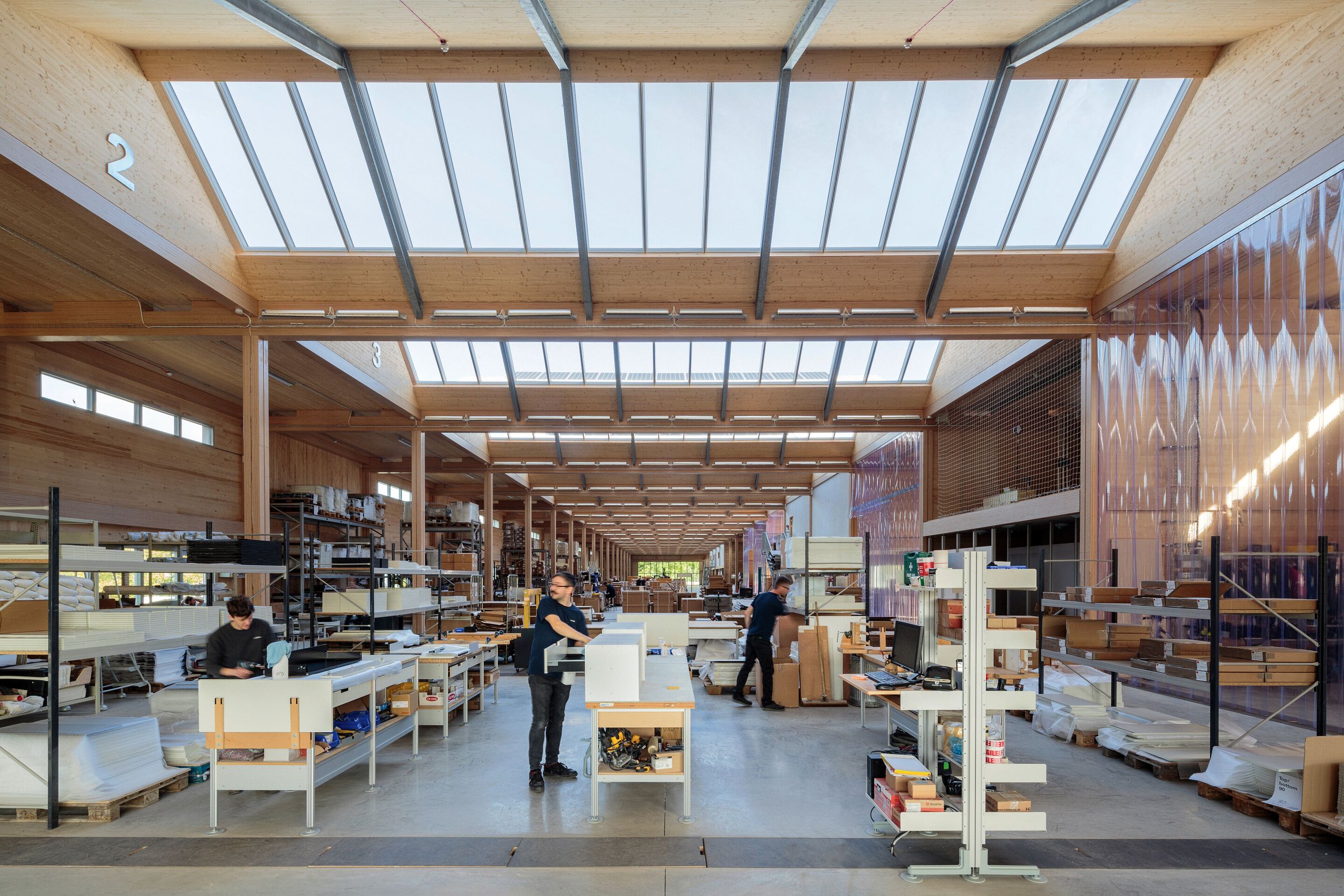
For more than forty years, director Mark Adams has led Vitsœ around a simple idea: creating furniture - and a business - that lasts longer. He views Vitsœ as a living organism, brought into being on the 4th of September 1959. Vitsœ is answerable to its purpose - allowing more people to live better, with less, that lasts longer.
Founded on German industrial designer Dieter Rams' philosophy of "less, but better", Vitsœ has consistently resisted many of the conventions of manufacturing and retail. Rather than chasing rapid growth, discounting or planned obsolescence, it has focused on durability, repairability, environmental performance and honest long-term relationships with customers.
Alongside this, Mark has spent more than two decades exploring an equally difficult question: how should a company like Vitsoe ultimately be owned? Indeed, can it be ownerless?
Despite Mark exploring the question for many years, Vitsœ has not yet found a structure that fully reflects its ambitions.
The business is owned and Mark and his co-director of 38 years. They would like to move to a structure more aligned with its ethos. Employee ownership could be one option but it has never felt sufficient. As Mark Adams puts it, the community Vitsœ serves is "much bigger than just the people who work for it."
Instead, Vitsœ has explored structures that would allow the company to exist independently of any individual owner, serving solely its purpose - in perpetuity - while remaining rooted in a less-than-accommodating English law that assumes the need for beneficiaries.
That search continues.
- Stewardship as a mindset before it becomes a legal structure
Although Vitsœ remains privately owned, many stewardship principles are already embedded in how it operates. Mark dislikes being described as the company's owner.
"I see myself as a steward, custodian, guardian."
His role, he says, is to give the organisation "the next seventy years" rather than maximise today's returns.
- Designing the organisation as carefully as the product
For Mark, ownership, governance, language and organisational culture are all matters of design.
The company refers to colleagues rather than employees, avoids sales promotions, invests patiently in product quality, and continually refines both its physical products and its organisational practices.
- The system is often the obstacle
Perhaps the most important lesson is not about Vitsœ itself but about the wider system.
Mark argues that the challenge is less changing one company than operating inside legal and financial systems designed around very different assumptions.
"We are operating within a system that does not really accommodate us."
Rather than seeing ownership as a transaction, he sees it as part of a much longer design project - one that English law does not yet easily support.
Vitsœ reminds us that stewardship is not simply a legal structure. It is a way of thinking about time, responsibility and purpose that can shape an organisation long before ownership is formally redesigned. At the same time, its unfinished journey highlights an important reality: even deeply committed founders can struggle to find legal structures that match their aspirations. Sometimes the blocker is not imagination but the institutional landscape itself.