Making Islamic finance work for everyone
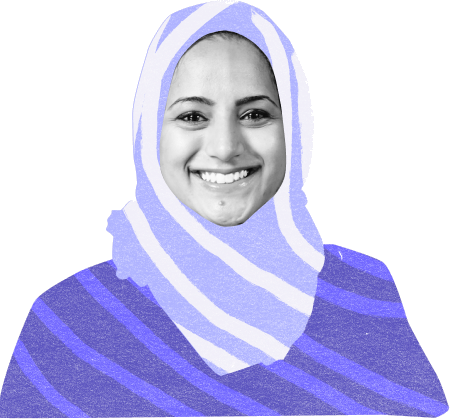
In 2016, Sheeza Shah founded UpEffect. She was frustrated that crowdfunding platforms were built for volume over impact, leaving social entrepreneurs to navigate them alone. UpEffect was built specifically to help purpose-driven founders raise money, one to one, to help enterprises become financially sustainable. It has kept a 95% campaign success rate ever since. It also deliberately offers subsidised rates to Palestinian-owned organisations and to businesses hit hardest by the pandemic.
She launched and ran Zebra Unite’s London chapter, a movement built, like UpEffect, around funding “zebras” rather than “unicorns.” She went on to help operationalise its hybrid entity in the US. With others there, she co-created the Zebra Solidarity Fund, inspired by Zakat, the Islamic obligation to give 2.5% of one's accumulated wealth. Instead of a tax on assets, the fund set aside 2.5% of the co-op's own revenue.
"That was a step beyond my wildest imaginations," she says.
Studying modern approaches to Islamic finance more closely, she found the same pattern repeating a level down. Islamic finance institutions and organisations had grown, mostly by tweaking conventional products and adding a Shariah wrapper, without addressing what she sees as the deeper issue: interest, and capital extracting value without sharing risk. And much of these challenges exist because the system rewards extractive and exploitative products over equitable ones.
"Islamic finance was meant to be for everyone, people of faith, people of no faith," she says. "In a correctly implemented Islamic economic system, we wouldn't see the level of poverty we see in the world today."
"It's been mimicking a lot of the traditional western capitalist models," she says, "because it's been trying so hard to fit into an economy that isn't designed for it."
With Abdul Haseeb Basit and Umar Moghul, she is now building Raf’a: a venture fund built on Shariah principles of equitable risk-sharing, sharing ownership and voting rights between founders, employees, the community and investors alike. It is deliberately not just for Muslims.
"Islamic finance was meant to be for everyone, people of faith, people of no faith," she says. "In a correctly implemented Islamic economic system, we wouldn't see the level of poverty we see in the world today."