
What happens when a mission-protection deal is only as strong as the buyer's continued goodwill? Ben & Jerry's independent board held for twenty years inside Unilever. It wasn't enough once Unilever's own incentives changed.
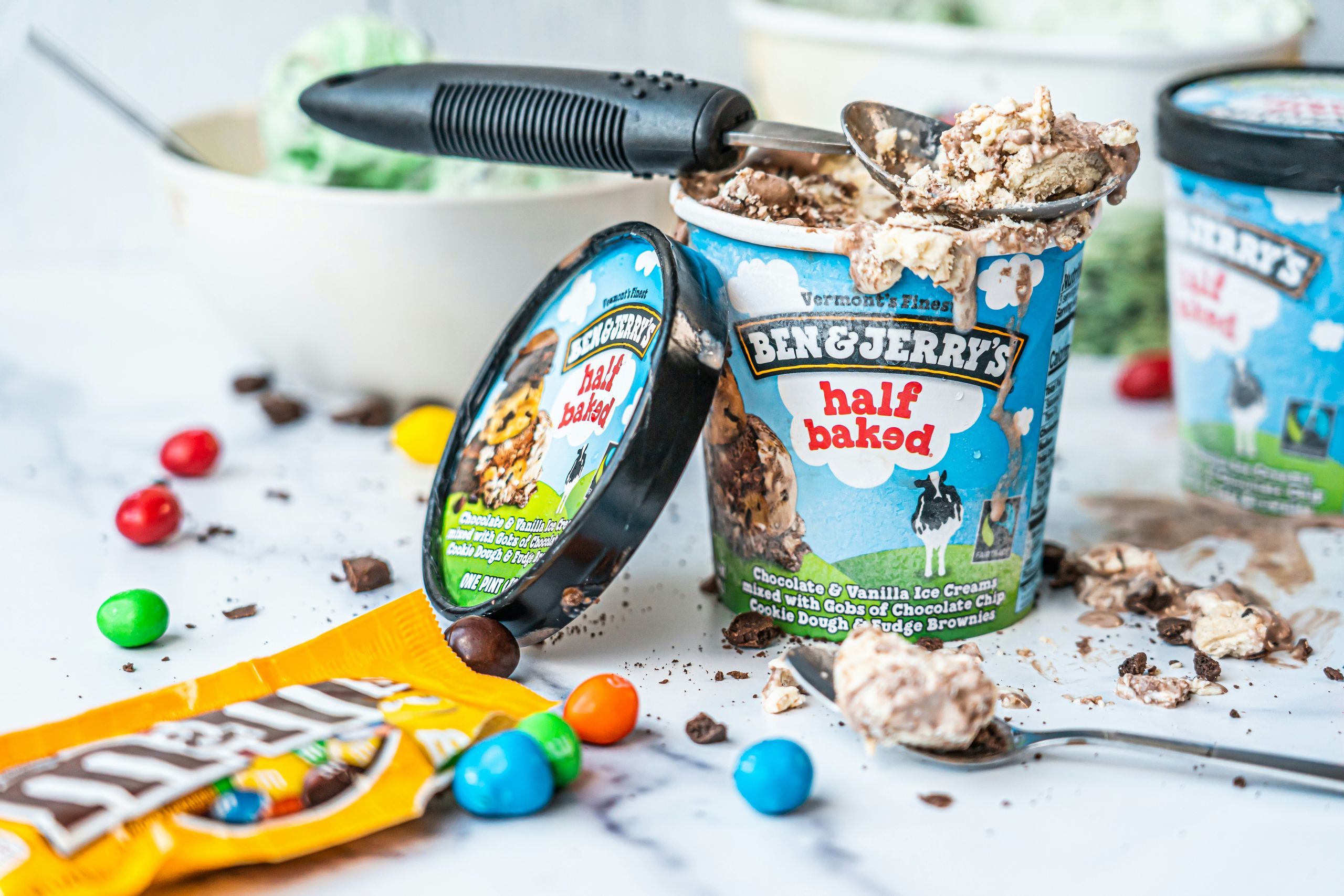
Ben Cohen and Jerry Greenfield started Ben & Jerry's in 1978 with $12,000 and a converted petrol station in Burlington, Vermont. Twenty-two years later, when Unilever offered $326 million for the company, the founders faced a hard question: how do you sell the business without selling the mission?
The 2000 sale created an independent board of directors with a specific mandate: protect Ben & Jerry's social mission inside a multinational that ultimately answered to shareholders. As Ben Cohen puts it: “At B&J we have a social mission, a product mission and a profit mission. No one of those is more important than the other.”
The board's authority ran parallel to Unilever's ownership: a governance protection layered onto a conventional sale, distinct from an ownership structure built around the mission from the outset.
For roughly twenty years, it held. The independent board oversaw brand integrity while Unilever ran the business at scale, and the activism was never confined to the US. In the UK, a dedicated UK Fund of the Ben & Jerry's Foundation backed organisations working on refugee and asylum rights, and the brand campaigned publicly through initiatives like Refugees Welcome and Cone Together, partnering with Safe Passage International and the International Rescue Committee to push for safe, legal routes for people seeking asylum in the UK. In the US, the same machinery helped restore voting rights to more than 1.5 million disenfranchised people in Florida, improved conditions for over 200 farm labourers across the Northeast, and helped advocate for legislation that reduced child poverty. Through the Ben & Jerry's Foundation, the company put more than $70 million into local organising, housing, immigrant rights and democracy groups.
A 2023 Jump Associates study found purpose-driven companies delivered market returns up to five times greater than the S&P 500 over the preceding twenty years, with Ben & Jerry's among the clearest examples.
By October 2025, the tone had hardened. After Unilever's Magnum unit blocked a Palestine-themed flavour that Ben & Jerry's own independent board had already approved, Cohen told The Guardian it amounted to a “corporate attack on free speech.”
As Cohen explains it, the arrangement always depended on Unilever choosing to honour it: “That worked well for around 20 years while B&J was part of Unilever, until they stopped listening. It didn't really exist at the time, but if we'd used steward ownership from the start, the purpose would have been legally locked in.”
Unilever spun its ice cream business off into a new standalone company, The Magnum Ice Cream Company, in 2025. Under Magnum, the independent board was cut down, funding to the Ben & Jerry's Foundation was withheld, and the brand's public voice on the issues it was built to speak on, including Palestine, Indigenous rights and racial justice, was suppressed.
Purpose Foundation, which has followed the dispute closely, put it plainly: protections at the governance level could not withstand the growing tension between profit maximisation and the need to uphold the company's core mission.
- Ben & Jerry's now sits inside Magnum, spun off from Unilever as a standalone public company in early 2026.
- Jerry Greenfield resigned in protest after 47 years with the company.
- The independent board and the Ben & Jerry's Foundation are suing Magnum in federal court for breach of contract.
- The Ben & Jerry's Foundation suspended operations after its funding was cut off.
- Ben Cohen is publicly campaigning for a buyback: rebranding Free Cone Day as “Free The Cone Day,” calling on Magnum to sell, and urging a boycott of Magnum's other brands. More than 130,000 people have signed a petition backing a sale to values-aligned investors.
- A governance protection layered onto a conventional sale is only as durable as the buyer's continued goodwill. Without a change in ownership itself, it can be unwound when incentives shift.
- Cohen's own reading: steward ownership would have locked the purpose in legally at the point of sale.
- Reclaiming the company will not, on its own, fix this. Without redesigning ownership itself, a buyback risks landing back in what one commentator at the founders' SXSW talk called “shareholder primacy prison.”