
Helping organisations grow without losing their soul. Karma Capital is rethinking how investment itself can become systemic and regenerative.
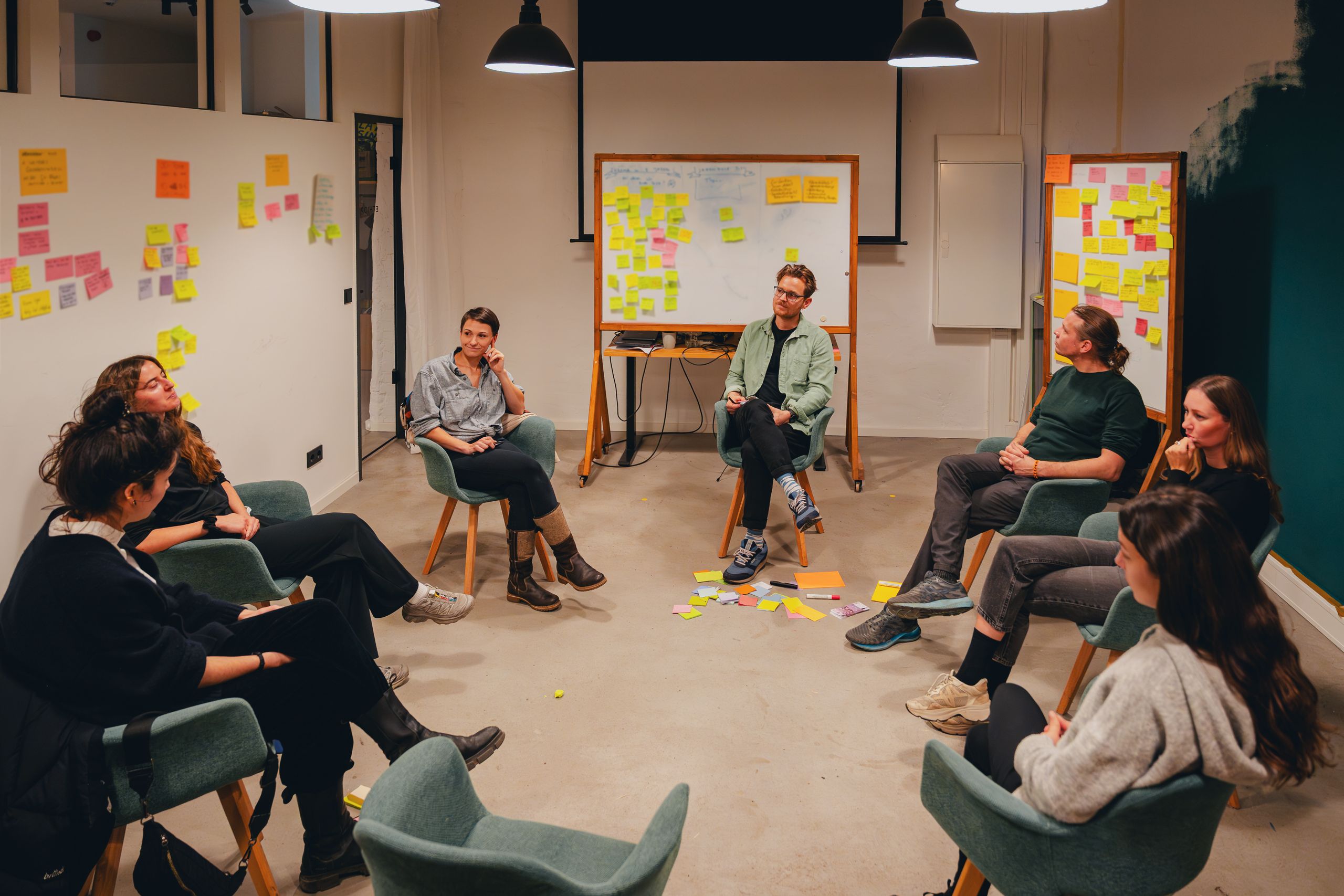
Karma Capital was founded from a simple but challenging observation: much of today's investment system rewards financial extraction rather than long-term stewardship.
Its founders believe that if organisations are to evolve towards more regenerative forms of ownership and governance, capital itself must evolve alongside them.
Karma Capital sees steward ownership as one building block within a wider transition towards what it describes as systemic investing: an approach that considers how investment shapes organisations, relationships and the wider economy.
Karma Capital starts with a different set of questions.
- How can capital help organisations fulfil their purpose and keep their spirit?
- How can investment strengthen stewardship rather than concentrate control?
- How can finance become part of the solution to systemic challenges, rather than reinforcing them?
These questions have led the team to explore steward ownership alongside systems thinking, complexity science and regenerative finance.
As Nikolas Klein explains:
"Steward ownership is one really important aspect... but it's not a standalone. It's a building block."
Stewardship requires aligned capital
Purpose-led ownership alone is not enough if organisations are forced to rely on capital that expects extraction. Equally, regenerative investors need ownership structures capable of protecting the purpose they are investing in. Ownership and capital must evolve together.
Investing in the field
Alongside developing investment vehicles, Karma Capital invests time in field-building, bringing together practitioners, lawyers, investors and ecosystem organisations working towards similar goals. They see changing the investment landscape as requiring collaboration as much as finance. Karma Capital calls this a polycapital approach: combining different financial capital such as investments and grants with field-building, research, education and narrative change to shift the wider system.
Capital as relationship
Karma Capital increasingly frames it as a long-term relationship of stewardship. Its work explores how investors can support organisations without becoming the dominant source of power within them.
Steward-owned businesses still face a shortage of appropriate growth capital.
Liquidity also remains a challenge. Conventional investment markets are built around exits and secondary trading, whereas stewardship models often seek continuity rather than sale. As a result, new financial structures are still emerging.
The biggest challenge is cultural.
Nikolas believes many founders and investors continue to assume that financial self-interest is the strongest human motivation. Steward ownership asks a different question: what becomes possible when purpose, care and stewardship are recognised as equally powerful drivers?
Karma Capital illustrates an important shift within the wider ecosystem. The conversation is moving beyond redesigning organisations towards redesigning the financial systems that support them.
Investors are beginning to ask a bigger question:
"What kind of economy does our capital help to create?"
- Regenerative ownership requires regenerative capital.
- Steward ownership is best understood as part of a wider systems approach, not a standalone solution.
- Investors can act as field-builders as well as providers of finance.
- The future of purpose-led enterprise may depend as much on innovation in finance as innovation in governance.