
How do you make steward ownership a credible alternative to the conventional ownership model? For Purpose Foundation and its decade of work, the answer lies in building an entire field, not simply a legal structure.
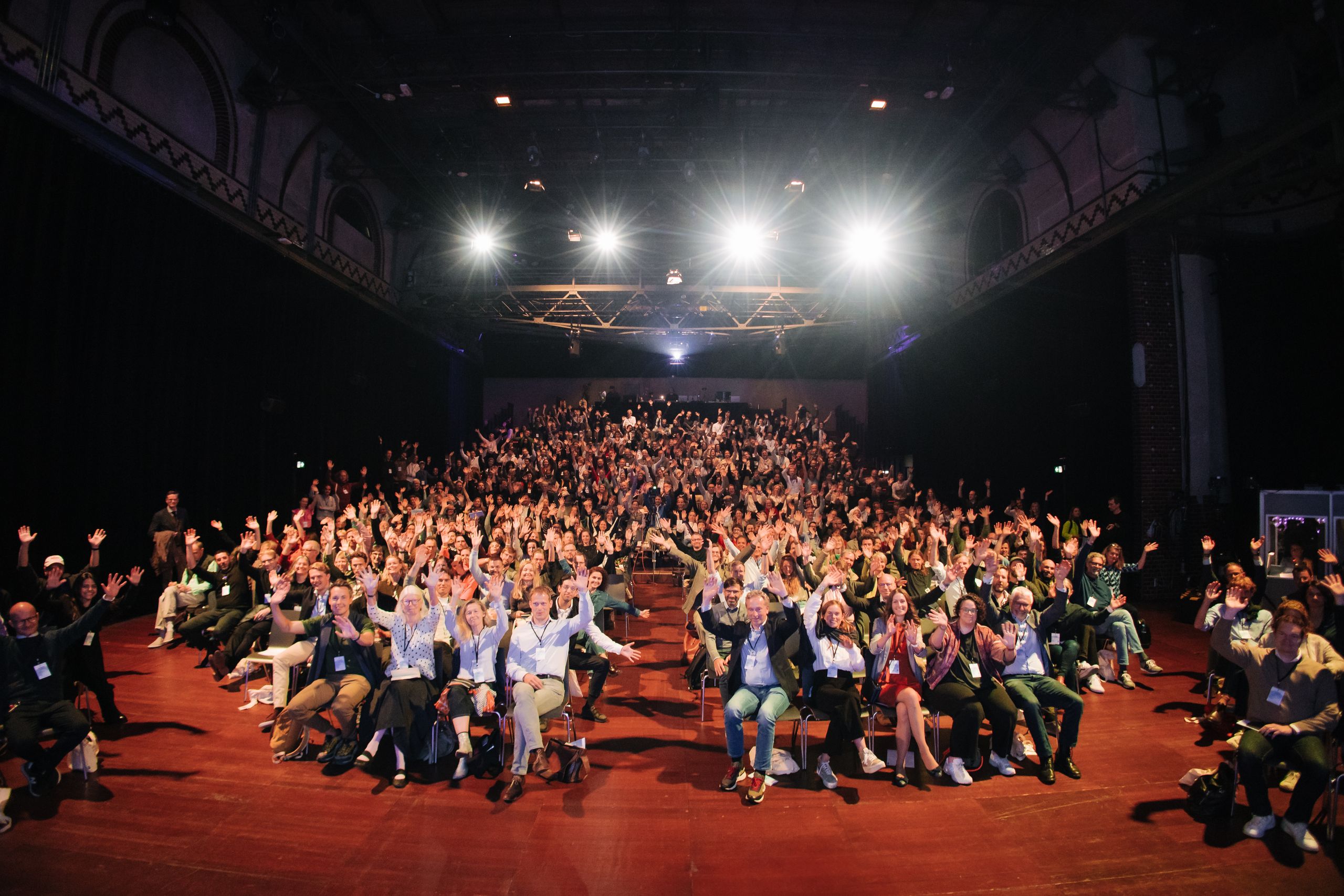
Most organisations focus on solving a problem. Purpose Foundation has spent the last decade doing something different: building the conditions that allow others to solve it.
When the organisation was founded in Germany in 2015, steward ownership was little known beyond a handful of pioneering companies, and there was no established name, language or field around it. There were few legal precedents, little specialist advice, almost no dedicated finance. Purpose Foundation coined the term “steward ownership” and set out to build a field around it, helping make steward ownership a viable option for businesses.
That meant building far more than a legal model.
As Annika Schneider describes it, field building means making steward ownership "a norm rather than a niche." That requires many parts of an ecosystem to develop together. Founders need stories and examples that show another way is possible. Lawyers need practical experience and legal templates. Investors need to understand the model, see evidence that it works in practice, and have access to steward-owned companies and relevant investment opportunities. Journalists need narratives that broaden public understanding. Policymakers need evidence that these approaches work in practice.
Purpose gradually evolved to support each of these layers. What began as a small group doing everything – from investment to consulting to communications – grew into interconnected teams focused on investment, advisory work, policy and field building. The organisation itself evolved as the field evolved.
Fields are built around practitioners, not ideas
In Germany, the work began with entrepreneurs facing real ownership questions and looking for viable alternatives. They needed not only workable ownership structures, but also practical advice, capital, legal solutions, knowledge and a wider community of experience around them. Purpose gradually evolved to support each of these layers. What began as a small group doing everything – from investment to consulting to communications – grew into interconnected teams focused on investment, advisory work, policy and field building. The organisation itself evolved as the field evolved.
The lesson is that field building follows local conditions, but always grows through practice rather than theory. With no dedicated legal form for steward ownership in place, its principles have been implemented through a range of existing legal structures, adapted to different jurisdictions and company contexts.
Purpose’s international work reveals that although legal systems differ, many of the underlying questions are remarkably similar across countries: who should ultimately hold power, how businesses can remain independent over time, and how ownership can support purpose without preventing investment. What changes is the context. In lower-income economies, stewardship is often linked to family security and long-term resilience; in wealthier countries, it is more frequently framed around mission, innovation and values.
Field infrastructure matters as much as organisational infrastructure
Legal mechanisms alone are not enough. They need accessible guidance, specialist advisers, founder communities, patient capital, public examples and shared language. Without these supporting structures, even well-designed ownership models remain difficult to adopt. As Annika reflects, the goal is not to remove conventional ownership, but to make steward ownership "as easily walkable" as the mainstream path.
Awareness is outpacing understanding
Today, steward ownership remains a small movement, but its visibility has changed dramatically. Seven years ago, few people had heard the term. Now it regularly appears in conversations across impact investing, entrepreneurship and business design. Awareness has spread faster than understanding, but that itself is a sign that the field is maturing.
Annika Schneider is candid about where progress has been slower than hoped. The biggest barrier is complexity itself. Unlike models with an immediate, tangible story, steward ownership can be abstract and hard to explain in a sentence. “Steward ownership is harder to communicate because it does not fit neatly into a familiar category,” she says. “Compared to other models like employee ownership, B Corps or cooperatives, steward ownership often requires more explanation.” In her view this isn’t a communications problem waiting to be solved; it is simply a harder story to tell.
Lack of available capital is also a major constraint. Annika notes: “There is a lot of enthusiasm for alternative ownership models, but putting capital behind them requires investors to develop the understanding and structures to take that step.”
Legal frameworks are moving too slowly, too. Both, in her words, need to move “much faster.”
A third gap is visibility at the top. Field building depends on well-known founders and investors staking their reputation on the model publicly — and Annika says that this is yet to happen. She points to Ben Cohen as one of the few genuinely public voices, and contrasts that with how unlikely it still is that, say, supermarket CEOs would take the stage to argue that shareholder primacy is failing their businesses.
For Purpose Foundation, success is not measured by the number of organisations using steward ownership alone. It is measured by something deeper: when founders encounter it as one legitimate design choice among many, supported by legal frameworks, finance, professional advice and public understanding. In other words, when the field itself has been built.