
What if you redesigned the organisation instead of just the product? Riversimple shows how ownership, governance, business model and technology can all be designed as one coherent system.
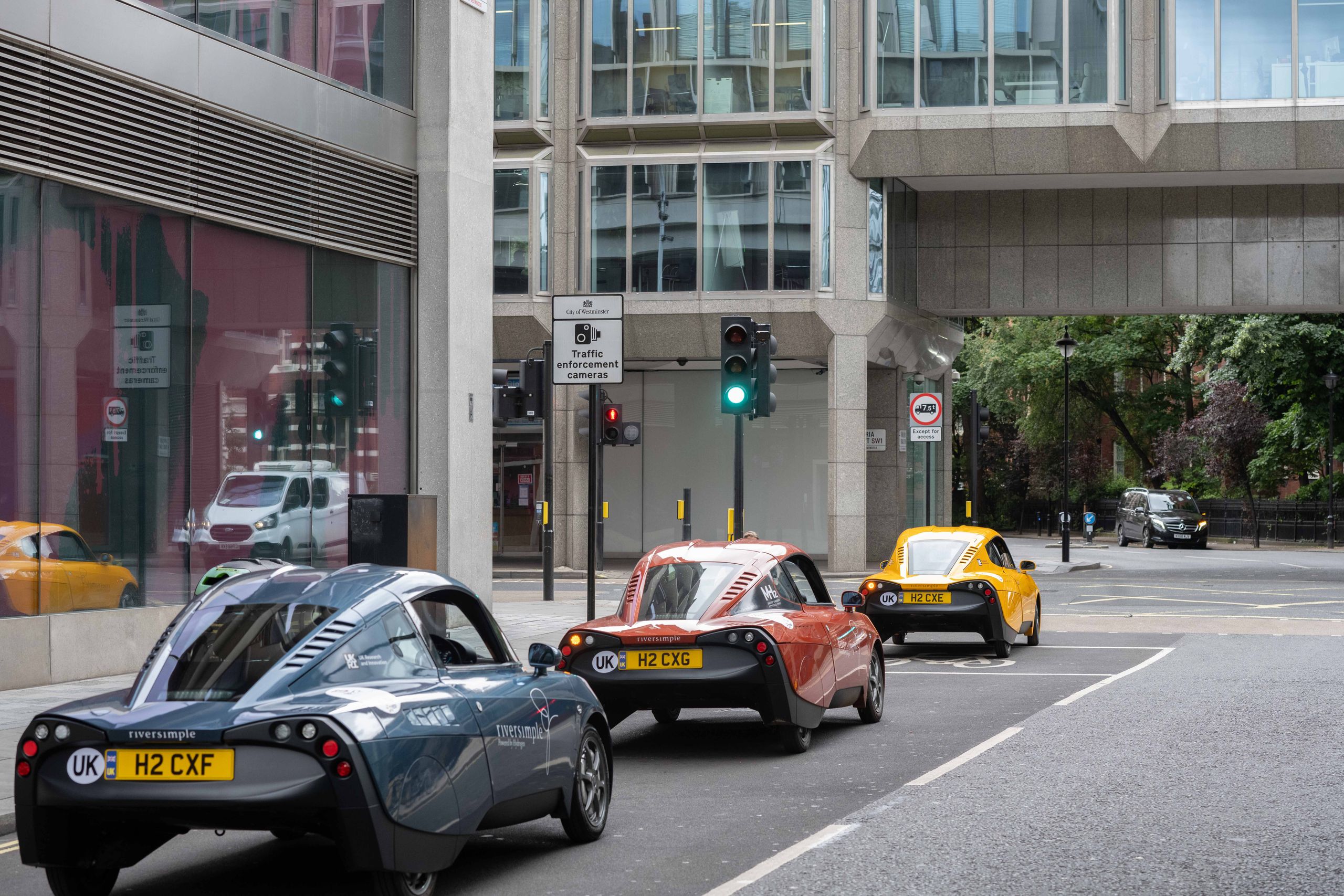
Riversimple began with a deceptively simple question: what if we redesigned the whole system of personal transport rather than simply building a better car?
Founder Hugo Spowers concluded that environmental impact could not be solved through engineering alone. The ownership, governance, financing and business model would also need to change. Over more than two decades, Riversimple has developed not only a radically lightweight hydrogen vehicle, but an organisation designed to align commercial success with long-term environmental stewardship.
Riversimple developed the Future Guardian model - an early UK example of what would now be recognised as steward ownership. Voting control is separated from equity rights. Stewardship of the company sits with custodians representing different stakeholder groups rather than solely with investors.
The company operates with a dual board governance structure. The board comprises an "operating board" and, as a constitutional safeguard for the company's purpose and long-term mission, a "stewards board". Voting shares are held by six independent Custodians, representing key stakeholder interests, all treated symmetrically: customers, employees, investors, suppliers, the community and the natural environment. The Operating Board’s fiduciary responsibility is ‘to balance and protect the benefit streams’ of these ‘Custodian shareholders’ and the Stewards Board’s role is to ensure that they do so.
Rather than pursuing conventional venture capital and a rapid exit, Riversimple has combined crowdfunding, values-aligned investment and public innovation funding to support patient development. Equity investors receive voting rights in the Investor Custodian only - control is in the hands of the 6 Custodians.
Most recently, the company secured UK Government funding as lead partner in the £1.7 million ZELLOR project, part of the Government's DRIVE35 programme, providing significant support for the next phase of vehicle development.
- From Selling Products to Providing a Service
Rather than selling vehicles outright, Riversimple intends to offer them through mobility service contracts. Keeping ownership of the vehicle through to End-of-Life, and internalising all operating costs such as fuel, aligns the company's incentives with durability, repairability and resource and energy efficiency rather than planned obsolescence.
- From Shareholder Primacy to Multi-Stakeholder Stewardship
Different stakeholder perspectives are intentionally built into governance. Rather than asking directors to balance competing interests informally, Riversimple designed constitutional mechanisms that ensure those interests are represented over the long term.
- From Incremental Improvement to Whole-System Design
Perhaps Riversimple's most distinctive feature is that every part of the organisation reflects the same philosophy. The engineering, business model, governance, ownership and financing are all designed together, recognising that sustainable outcomes depend on the coherence of the whole system rather than any single innovation.
- A founder willing to redesign the organisation, not just the product.
- Strong constitutional protection for long-term purpose.
- Governance intentionally gives voice to multiple stakeholders.
- The company cannot maximise short-term returns at the expense of long-term benefit streams.
- Consistent application of systems thinking across technology, ownership and business model.
- More than two decades developing the world's lightest and most efficient hydrogen-powered vehicles.
- Pioneer of stakeholder-centred governance in UK manufacturing.
- Growing recognition from government and industry, including leadership of the UK Government-supported ZELLOR programme.
- Widely recognised internationally as an influential example of stewardship-based business design.
- The governance model appears more complex than conventional shareholder companies.
- Raising capital has been challenging because the company does not offer a conventional venture-capital exit.
- Developing breakthrough technologies requires long time horizons and patient investors.
- The integrated design can take longer to explain than traditional business models.
- Ownership, governance and capital work best when designed together.
- Stewardship is not only about protecting purpose. It can shape products, incentives and business models.
- Different forms of capital become possible when organisations are clear about what they are trying to optimise.
- Radical innovation sometimes requires redesigning the organisation as much as the technology.