
How do you design fair reward for founders while still moving towards more shared ownership? Zhero has spent three years researching employee ownership as a path to resolving this, including a formal partnership with UCL. Its founders are open about how unresolved the balance still is.
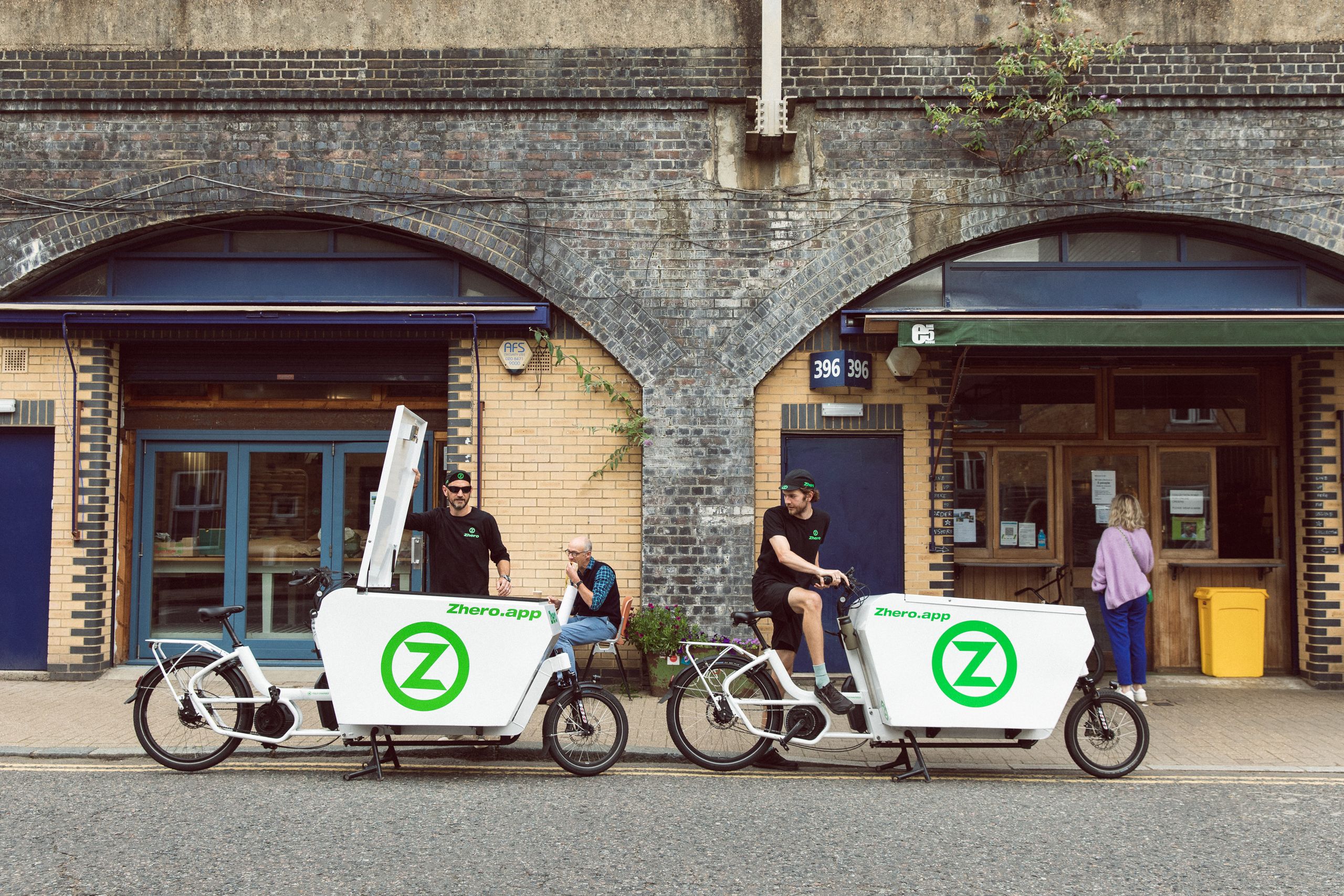
Joe Sharpe and Ollie King founded Zhero in 2020, after years working together in white-van logistics and installation work for the furniture and design trade. Joe's background before that wasn’t in the sector: he has a master’s in human ecology and critical sustainability, and worked for several years in environmental conservation. Between them, they built a logistics firm on an explicit premise: electric vans and cargo bikes from day one, rooted in social and environmental justice and supporting London’s transition to clean transport.
On legal structure, they took advice from other small business owners and followed it deliberately: get the business commercially viable first, then think about ethical ideals from a governance and ownership perspective. The founders have run Zhero as a conventional 50/50 limited company since incorporation. Six years on, Zhero employs 30 people across three contract types, turns over roughly £1 million a year, growing at around 25% annually, and runs at around 10% profitability, with a target of 20% and £2 million turnover within the coming years.
The question of ownership surfaced about eighteen months in, and the trigger was practical rather than ideological. Joe and Ollie wanted to give their first full-year employee a Christmas bonus on the same terms they paid themselves, and discovered the tax system worked against it: a director's dividend is taxed at a fraction of the rate an employee pays on the same bonus as income. That practical unfairness, combined with an instinct that “collectively we can probably do a better job than the two of us alone,” sent Joe into researching the policy and language of employee ownership in earnest.
He canvassed other founders (a cargo bike courier, a printing co-operative, a bakery partway through its own transition) and mapped the options: limited companies at one end, co-operatives at the other, with community interest companies somewhere in between. The model that stuck with him sits in what he calls a healthy middle ground: an employee ownership trust that shares the majority of the company's value with everyone who works there, while still recognising the labour and risk the founders put in to build it. As Joe puts it: “I'm still sympathetic to the intellectual and real labour that's gone into this, and the risk that's gone into starting it. And yet I'm still really compelled by the idea of shared ownership.”
In 2024, that thinking became a formal knowledge-exchange partnership with UCL's Institute for Global Prosperity, led by Dr Onyeka Idoko and funded by HEIF. The project set out to co-design a majority employee-owned model, loosely inspired by Mondragón, that could still attract impact investment. By the time we spoke in 2026, Joe describes this as something that “trailed off” without a clear conclusion.
The tension becomes clear when Joe gets into the numbers. The UCL project was aimed at majority employee ownership, but when Joe talks about his own thinking, the range is wider and more provisional: a starting point on an intentional journey. “Not 100%,” he says of the founders' stake: “could be 51%, could be 90%.” This is the nub of the design question: how much ownership can move to the people who work there, and how quickly, before it stops feeling like fair recognition of what the founders built, risked and are still risking. Three years into actively wanting to make this change, Joe still doesn't have a fixed answer: “Everyone keeps putting me off it. Maybe I'll do it one day. Maybe I won't.”
- The advice that got Zhero off the ground (build commercial viability first) is the same logic that has kept ownership change on the back burner. Joe doesn't regret the advice. He thinks chasing both at once, with only two founders and limited time, would have put the business itself at risk.
- Staying a limited company also had a cost: co-operative or community interest company status would likely have opened up grants and alternative funding that a straight Ltd doesn't qualify for.
- Alternative ownership models are, in Joe's words, “completely hidden” from new founders unless they are already attuned to that way of thinking. The startup incubators he has been part of all follow a similar format: pitch to investors, sell a stake, scale for exit. Employee or shared ownership was never presented as a viable alternative path.
Joe makes a commercial case for shared ownership: he expects it would be a genuine point of difference amongst clean logistics competitors, though he's quick to admit that's a hunch. “If I'm a company choosing between three logistics firms, and one is majority employee owned and commercially viable, I'm going to choose that one.”
For founders further back in the process, Zhero is a useful example because the transition hasn't happened yet. It shows the calculation founders have to make out in the open: what fair reward looks like for the people who built and shouldered the risk of the business, how that can shift gradually and intentionally towards a structure that shares more value and more power, and why ownership and governance need designing together. An unresolved journey like Joe's says more about what this transition takes than a finished one would.