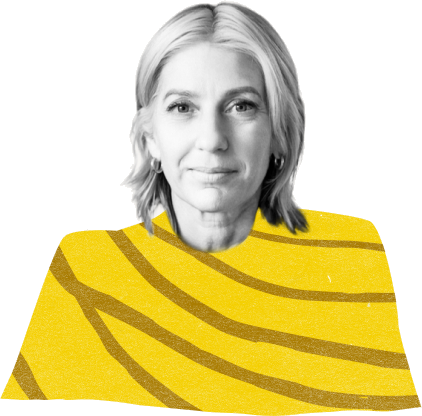
The strategist who widens who gets a say
One thread runs through Erica Neve's career: who gets included, and who gets heard. Before Yoak, she spent years in youth education and social mobility work, including the Advocacy Academy, Supa Talent and UpRising, and in corporate learning design for organisations including Freeformers, Google and HSBC, always returning to the same question of who a system was actually built to serve.
That question has a personal root. As a child, she spent months in hospital, and remembers how little say she had in decisions made about her own body and treatment. It left her with a lasting curiosity about governance: who gets to be in the room, and who doesn't.
That thread showed up early in her professional life too, in the music industry.
She'd been hired to train artists for mainstream media. Within days she realised the job itself was the problem: it existed to make Black artists palatable to an industry that wanted their culture without their discomfort. "Our artists needed to be Black enough to be cool," she says, "but not Black enough to be uneasy or uncomfortable to watch and listen to." She changed her own role instead, and spent the rest of that job working out what media training could look like if it protected artists' own integrity.
In her board roles at Bupa and the Eden Project now, and her work at Yoak, her governance design work seeks to bring more voices into the room: enquiring whether workers, communities and the natural world have a genuine vote in decisions that affect them. The Third Seat, one of Yoak's initiatives, holds a golden share in steward-owned businesses: a formal seat at the board table whose only job is to protect the company's purpose. Through her Rights of Nature work at the Earth Funding Lab, she's pushing the same idea further: putting nature on the board.
"If this approach was adopted widely, the world would be a far better place," she says. "Life would be sustainable on this planet, and people, and nature, would be heard and witnessed in ways they aren't now."
"Success would be to feel like I’m no longer working at the edges," she says. "It would mean these ideas are being talked about in our mainstream media, in our schools, in our family homes."