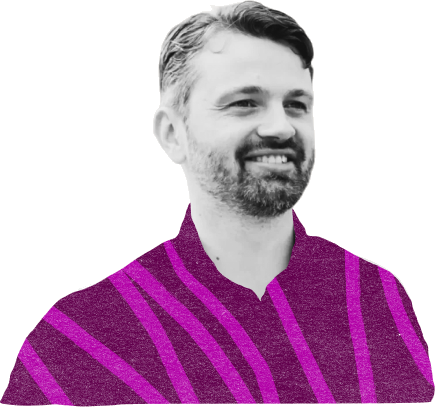
Reshaping a £400 million endowment
Erinch Sahan's career reads like a steady search for deeper leverage points on the same problem: inequality built into how the economy runs. He started in market strategy at Procter & Gamble, moved to aid programmes for the Australian Government, then to campaigns at Oxfam, each step a little closer to the root cause than the last.
As CEO of the World Fair Trade Organization, he went further still: changing the actual terms of trade between producers and buyers. Teaching sustainability at Cambridge, then leading business and enterprise work at the Doughnut Economics Action Lab, pushed him to question the growth-based economic model sitting underneath all of it.
At the Joseph Rowntree Foundation, that search has landed him at what he now calls the deepest lever of all: who owns and controls the assets in an economy. He leads JRF's move to invest the whole of its around £400 million endowment in line with its mission, up from the roughly 5% (~£25 million) allocated to social investment since 2015.
"I saw the opportunity to not just channel capital, but reshape the terms on which capital goes into this space," he says.
"If you've helped a community buy and control a local asset, you've started a flywheel that keeps bringing more wealth into distributive ownership," Erinch says. "Even in the worst case, you've left behind an asset that's now owned and controlled by a community."
His case: the real opportunity is about changing who owns and controls assets, since that is what makes change durable.
"If you've helped a community buy and control a local asset, you've started a flywheel that keeps bringing more wealth into distributive ownership," Erinch says. "Even in the worst case, you've left behind an asset that's now owned and controlled by a community."
"Fifteen years ago, I'd have been treated like a lunatic for saying these things," he reflects. "Now, no one makes the case for extractive ownership anymore. It transcends left and right."