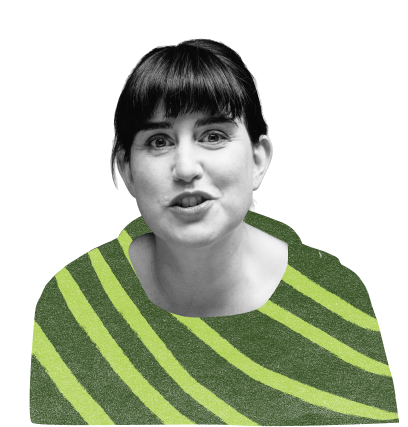
The designer who made business her medium
When Jane ní Dhulchaointigh created Sugru, she didn’t set out to build a startup. Her idea was to change people's relationship with the things they owned.
Trained as an artist and designer, she imagined business as a creative medium: a way of encouraging people to repair what they owned instead of replacing it. Sugru grew into an international success, attracting global recognition and building a thriving community around repair. Yet behind that success lay an increasingly difficult tension between the mission that had inspired the company and the financial structures that shaped its growth.
"Business was the vehicle," she reflects. "But it started out as an art project. My mission was to inspire people to mend things and deepen their relationship with the material world."
As the business scaled, Jane found herself following what seemed the only available path. Investors, boards, organisational structures and expectations all came with an implicit message: this is simply how business is done. Looking back, she describes feeling as though she had "got on a train" in her twenties and only stepped off eighteen years later in a place she had never consciously intended to reach.
"Business is one of the most vital and creative parts of our society. The opportunity is to design not just for protection, but for aliveness… for the conditions in which people and ideas can flourish."
Only after leaving the business did she encounter ideas that changed how she understood entrepreneurship. Through the BiLeadership Fellowship, regenerative thinking and later her work with Library of Things, she began to see governance, ownership and capital differently. What she had once taken as fixed constraints, she was now working with as design choices.
"Library of Things showed me that ownership, governance and relationships had all been intentionally designed. It shone a light on these invisible forces that I'd felt throughout Sugru but never realised could themselves be designed."
Today Jane works with founders exploring regenerative enterprise and systemic design. She remains enthusiastic about entrepreneurship, seeing early-stage ventures as places of creativity and possibility.
"We've just got to redesign it," she says. "Business is one of the most vital and creative parts of our society. The opportunity is to design not just for protection, but for aliveness… for the conditions in which people and ideas can flourish."