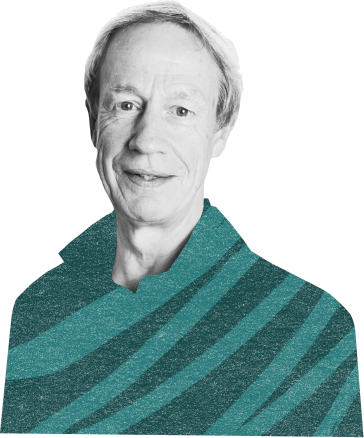
The legal architect who makes new possibilities possible
For more than forty years, Malcolm Lynch has been quietly helping shape some of the UK's most innovative ownership models. From Cafédirect's guardian share to employee ownership trusts, community businesses and co-operatives, his work sits behind organisations that most people have never realised required entirely new legal thinking.
His motivation has never really changed.
"I thought that if people could own their own jobs in their own businesses, they would be less likely to be in poverty." That conviction emerged while he was still a law student, helping people overwhelmed by debt at a community law centre.
Over four decades, Malcolm has watched attitudes change. When he began, the idea that companies should concern themselves with society or the environment was largely absent from mainstream business. Today, he sees governance increasingly recognised as inseparable from social and environmental responsibility. The law itself, he argues, has evolved far more than most people realise.
"UK company law has a great deal of flexibility," he says. "It's just not understood quite how flexible it can be."
"I thought that if people could own their own jobs in their own businesses, they would be less likely to be in poverty." That conviction emerged while he was still a law student, helping people overwhelmed by debt at a community law centre.
For Malcolm, legislation isn't the real obstacle. It’s that most founders only ever see one default model of business. Alternative forms remain invisible until someone shows them another possibility. Once a successful model becomes familiar (whether employee ownership, a golden share or another stewardship approach), it becomes much easier for others to follow.
Legal structures are never enough on their own.
"It's not simply the fact that you have these legal mechanisms," he reflects. "It's also that you have the people." Governance, culture and leadership have to evolve together.
Malcolm remains optimistic: he has seen ideas once considered fringe become accepted practice, from employee ownership to community interest companies. His hope lies in the growing number of founders, lawyers and advisers willing to experiment.
"There are many more people trying to do things differently now than when I first started. They may still be relatively few, but they have the solutions for the future."