
How do you accelerate innovation in finance? The Innovative Finance Initiative creates the conditions for practitioners to learn together, experiment collaboratively and build shared infrastructure for the field. IFI is intentionally designed as a five-year time-bound nonprofit, because it hopes that in five years, it will have fulfilled its mission and the field will no longer need it to exist.
Many people working in impact investing, philanthropy and innovative finance are grappling with similar questions: how should funds be structured? How can ownership protect mission? What forms of capital best support long-term impact? Yet these questions are often explored in isolation, within organisations or sectors.
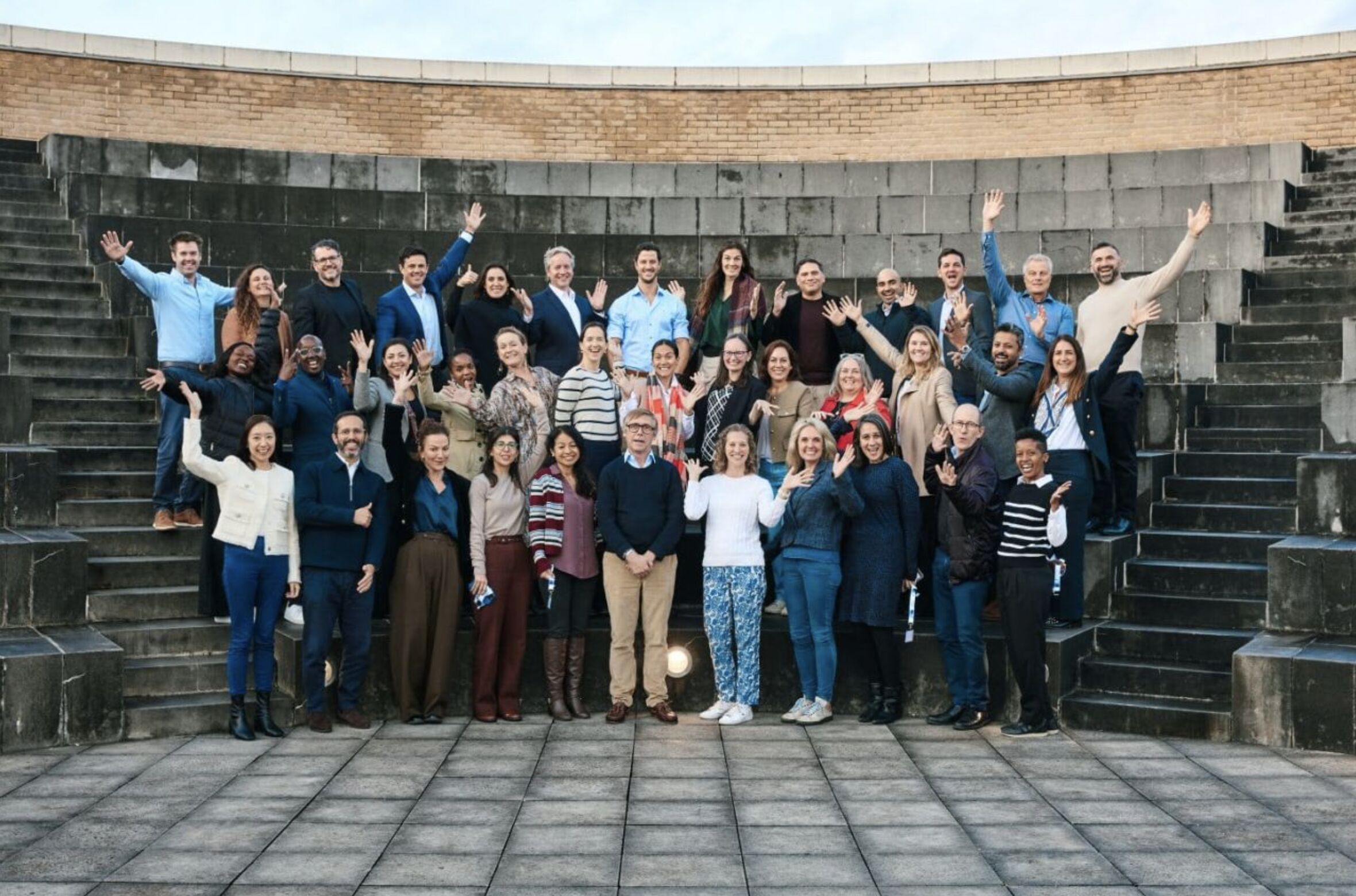
Hosted by Aunnie Patton Power, the Innovative Finance Initiative (IFI) brings together funders, founders, practitioners and intermediaries from around the world to explore these questions collectively. It doesn’t promote a single model, but seeks to strengthen the wider ecosystem through shared learning and collaboration.
At the heart of IFI is the idea of Community Missions.
Each mission begins with a practical question, topic or idea identified by members: for example, impact exits, steward ownership, innovative fund structures or impact-linked compensation. Small groups then work together over several months to deepen understanding, test ideas and create resources that can benefit the wider field.
IFI treats innovation as something that can be intentionally designed through relationships, experimentation and shared infrastructure beyond any single organisation. The role of the central team is primarily to convene, facilitate and support others to explore ideas together.
Learning becomes infrastructure
Missions aim to produce practical outputs such as frameworks, benchmarks, directories and tools that others can use. Learning is designed to become a public resource.
Communities can generate organisational innovation
Over its first year, IFI launched nearly twenty missions spanning topics from financing steward ownership and impact-first funding strategies to reporting for systemic impacts and innovative fund structures. The initiative has also developed training programmes and community events to help practitioners apply these ideas in practice.
The community itself evolves through experimentation
IFI explicitly describes its mission model as a prototype. It doesn’t assume it already knows how collaboration should work, and continuously adapts the structure based on member feedback and experience.
Many field-building organisations focus on promoting a particular model or reform. IFI takes a different approach. It builds the conditions in which many different innovations can emerge.
Avoiding predetermined solutions, it asks how practitioners can learn faster together, coordinate more effectively and create shared infrastructure that helps the whole field evolve.
- Innovation is often accelerated through communities of practice as well as individual organisations.
- Shared infrastructure - frameworks, tools and learning resources - can be as important as new financial instruments.
- Designing for experimentation allows ideas to evolve beyond theory through practice.
- Convening can itself become a form of systems intervention.