
Can a business with a community focus take on investment without losing trust? Library of Things moved to steward ownership in 2019 to secure its mission. It raised £1.2m on its own terms, but found the door closed to most conventional capital.
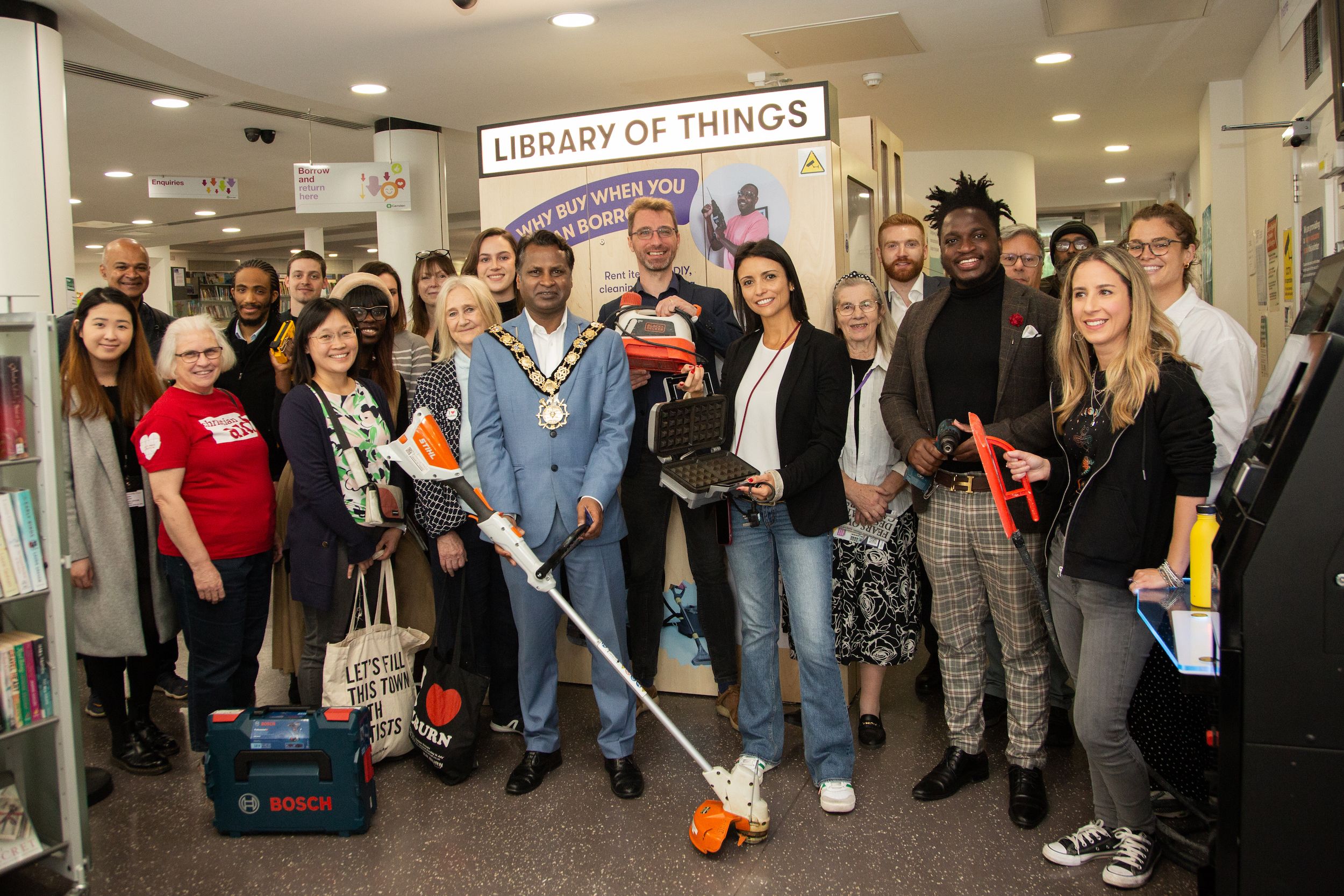
Library of Things (LoT) was started in 2014 by Emma Shaw, Bex Trevelyan and Sophia Wyatt to make borrowing better than buying, for all. A secondary layer to its purpose emerged along the way: to design and practise a new way of doing business in service of thriving people and places. Having started from an experiment operating from a shipping container, LoT now operates self-service sharing lockers in collaboration with local authority partners in 23 London neighbourhoods, and licenses to other UK & European cities. The company employs employs around 15 people on an annual turnover of c.£800k.
Ownership Converted from a non-profit CLG to steward-ownership in 2019 in order to raise growth investment. LoT Ltd is a private company limited by shares with a mission-lock written into the articles of association. LoT holds the assets including the proprietary lending tech platform. Directors, not shareholders, are the ultimate decision-makers. The founding team holds a stake in the business, but their primary focus is not an exit. In 2024, LoT set up a sister CLG ‘LoT Community’, to run the place-based London libraries and to be eligible for grants and social investment that recognise the social and civic value of this community infrastructure.
Governance A non-profit, Things Trust, holds a single golden share. Matters requiring the consent of the golden share are a) changing the nature of the business b) agreeing an exit c) asset transfers, winding up of the company or changes to its investment agreement. Its members, a council of six independent and voluntary mission guardians that is refreshed every three years, represent LoT’s wider stakeholder community: borrowers, partners, team, community, investors and the planet.
Capital £1.2m raised from angels and family offices, plus £350k via the Ethex community crowdfunding platform. £500k patient debt from Joseph Rowntree Foundation. Impact investors are offered a "fair return", which indicatively could look like a 2x return over 6–8 years. Earlier-stage development was supported by a mix of patient equity and grants.
- Mission protected through growth
Re-wiring the company in 2019 with Patrick Andrews (the Barefoot Lawyer, now co-founder at Yoak) allowed LoT to take on equity while locking in purpose. Investors expecting conventional governance walked away; those who came in did so on LoT’s terms, and shared values.
“We’re democratising not only who owns our stuff but also who owns our company.” Emma Shaw
- Governance structures shape day-to-day culture
Governance is emblematic of deeper cultural principles. Fair exchange is an operating principle that runs through the organisation, from member pricing through to the team rewards. The leadership team designed FairX, a process where staff propose their own salaries via a guided peer review. Consent-based decision-making lets any team member initiate a change. The company operates a four-day working week. This has meant a more resilient and engaged team, 90% of the wider leadership have been involved since the governance evolution in 2019.
- Designing for replication rather than centralised growth
Early on the team shared their knowhow with other communities, through tours, toolkits & webinars to help grow a movement. They’ve since made their own technology & knowhow licensable to others who wish to operate their latest model. Cities, communities and businesses around the UK and Europe can set up an item-sharing library without having to rebuild the infrastructure from scratch.
- 55,000 members across 22 London neighbourhoods; 8 additional European cities supported
- 700 tonnes of electricals reused; 2,000 tonnes of CO₂ avoided
- £14.5m saved by members; 65% of members say LoT helps them feel more connected to their neighbourhood
- Behaviour Change: over half of members say that since starting to use Library of Things, they buy fewer new items in general
- Suppliers including Bosch, Kärcher, Stihl and Vango engaged on circular models
- The mission-lock and stewardship structure excluded LoT from most forms of conventional capital. Multiple impact VC offers came on the condition of restructuring; all were declined so far. “We were told no a lot” — Emma Shaw. This may have held back the pace of growth and competitiveness of LoT’s tenders for other city wide contracts in Europe, where similar organisations with more funding or support were able to outbid them.
- The biggest equity crowdfunding platforms like Crowdcube and Seedrs wouldn’t or couldn't work with the SO structure. Ethex has a much smaller audience which limited the size of the crowdfunding raise.
- Patient, mission-aligned capital was rare at the time; the fundraising journey took a personal toll on the founders and team
- Several iterations of enterprise design were needed before the current model evolved
LoT Co-Founder, Sophia Wyatt, reflected with us how circumstances are changing; “We would likely not have the same constraints today, a lot of what we were doing was just too rare at the time.”
- Ownership design shapes what becomes possible.
Library of Things shows how governance, ownership and capital interact in practice. The stewardship structure did not remove tension or difficulty, but it changed which conversations could be held and what kinds of trade-offs were considered legitimate.
- Alternative structures create both freedom and constraints
Whilst the same mission protections that supported long-term integrity limited access to conventional capital and slowed certain forms of growth, the deeper design created greater resilience and regeneration in the concept, the movement, and the team.
- These models evolve iteratively The current structure emerged through experimentation over time, rather than through a single ideal design. In practice, ownership and governance often develop through adaptation, learning and response to lived realities.